LIDAR Possibilities: Position-Based Sensor Data
LIDAR Possibilities:
Position-Based Sensor Data
LIDAR Released on iPhone 12 Pro
Have you gotten your hands on the new iPhone 12 Pro (or the iPad Pro)? If so, you might be pleased to learn that it has LIDAR capabilities. LIDAR uses light signals to map its environment with high precision (down to a few centimeters of error). This technology has the potential to be a game-changer with regard to position-based data. Your smartphone will no longer be reliant upon imperfect visual cues from the camera or dead-reckoning with the accelerometer and gyroscope to determine its position.
Possible applications of LIDAR are expansive, including providing support to those with visual impairments or navigating in indoor environments where GPS tracking is not possible. If you are physics teacher, this means that the classic "match the motion graph" with your body activity might be soon accessible. Learn more about LIDAR in the video below!
In the News

NeoStress: Sound
Neonates are exposed to "excessive sound levels [that are a] painful and potentially harmful stimulus" during transport, according to this study by Deborah Gilmour et al., who used #Physics Toolbox in their research.
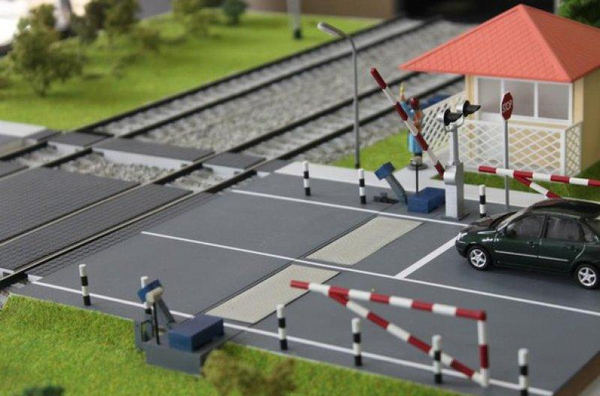
How Bad Is the Railroad Crossing?
This Russian-language blog explores "how bad" a railroad crossing is using Physics Toolbox, and explores and how its improvement could theoretically improve traffic conditions across the town.
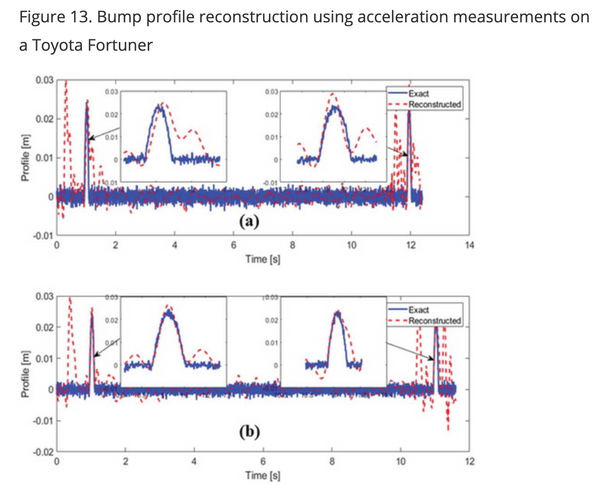
Calculation of Road Profiles
Physics Toolbox used in this South African study of road conditions with a smartphone accelerometer.

Vibration Analysis of a Motorbike to find Transmission to Hands and Back
Physics Toolbox used in India to determine how motor settings impact frequency of vibration experienced in different body parts.
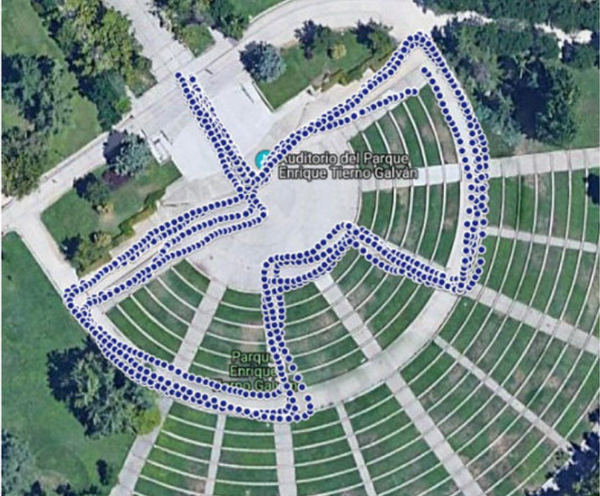
Multi-sensor Motion Recognition
Researchers used multiple sensors to successfully identify different types of human movement, such as walking up stairs while turning.

More Biomechanics
This paper uses a smartphone accelerometer to differentiate "six different human activities."
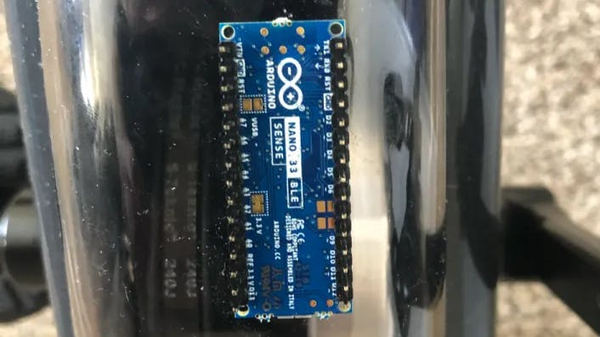
Adding Smarts to a Dumb Exercise Bike
A user improves his exercise bike tracker by monitoring changes in the magnetically induced resistance with his smartphone.
Educational Applications
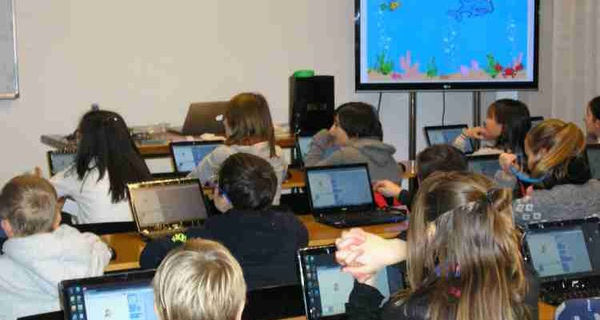
Integrated Digital Learning in a Covid Generation
This Italian-language article includes an interview with a teachers from Naples, who provides the use of Physics Toolbox as an example of integrated digital teaching.
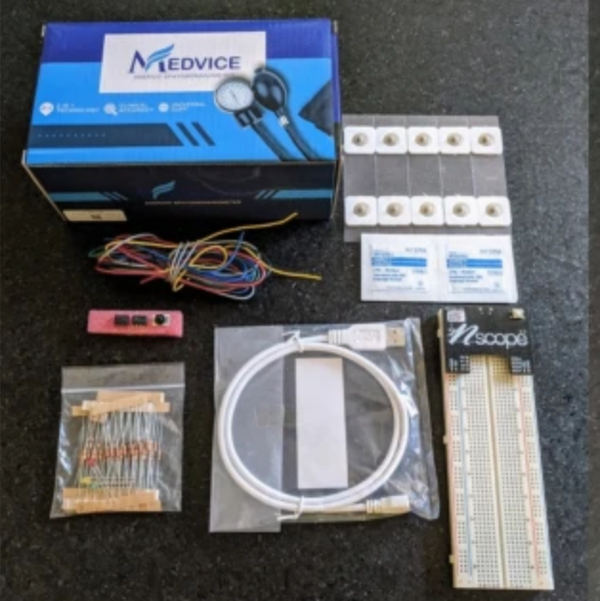
Redesigning Biomedical Engineering Labs for Remote Learning
A faculty member from Northwestern University explores the impact of teaching a hands-on course with medical equipment and Physics Toolbox.
Undergraduate Physics Student Reflects on At-Home Learning
This newsletter from the Drew University Society of Physics Students presents a learner's perspective of distance education.
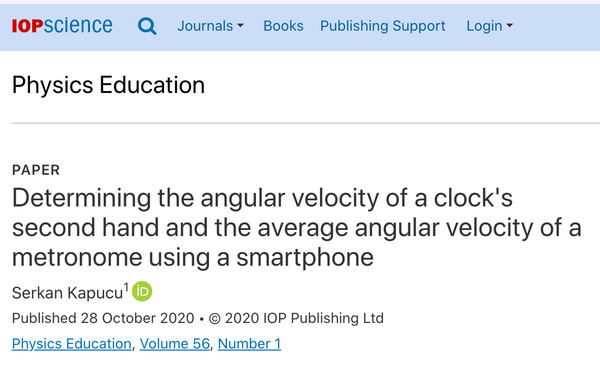
Measuring the Velocity of Rotating, Ticking Objects
This article describes a simple activity for sound-based recognition of motion and the use of trigonometry as a practical example of angular velocity.
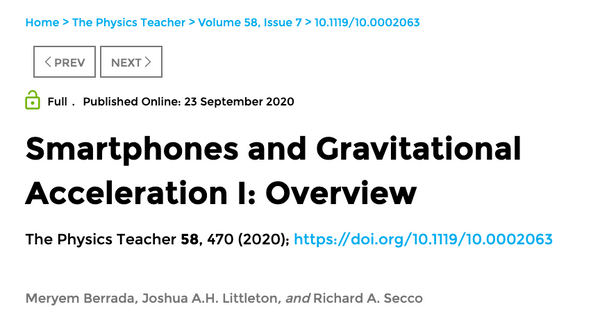
Measuring Acceleration Due to Gravity
What affects acceleration due to gravity? This two-part article explores both terrestrial effects as well as introduces two simple activities with smartphone.
Measuring Magnetic Field Tutorial
Physical Pendulum Studies with a Smartphone (Spanish language)
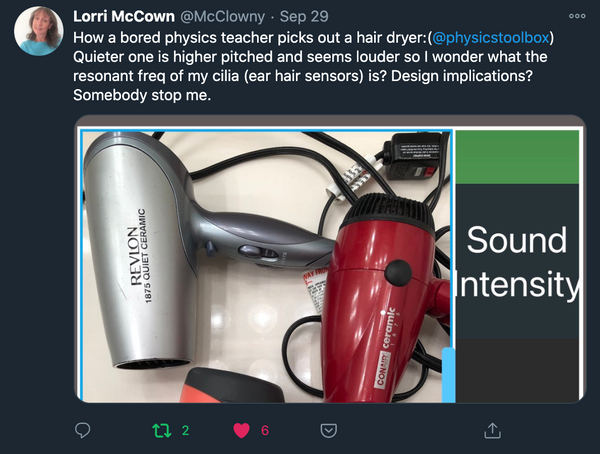
Have Physics Toolbox Apps been useful to you? We'd love to get your feedback on this quick 5-minute survey.
Have a great story to share about how you are using Physics Toolbox Apps? We'd love to feature you and your ideas in our newsletter or on our website! Drop us a message at any time to share your story.
Previous Newsletter Editions