Resources from around the Web
Resources from
around the Web
New Features: Calibration and Sensor Info
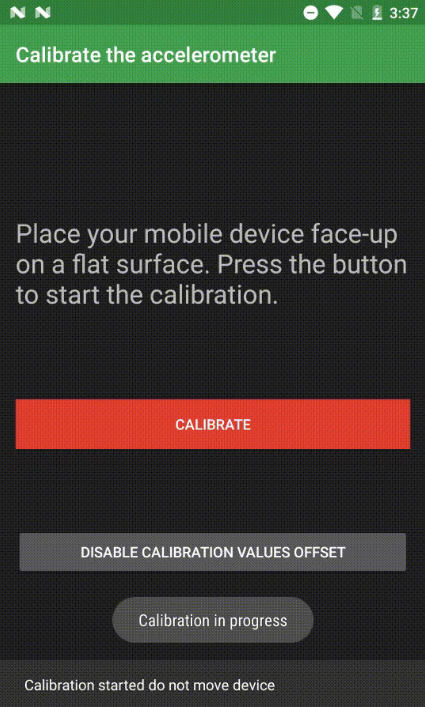
Two new features have recently been added to Physics Toolbox Sensor Suite to allow users to control the precision and accuracy of data collection.
Calibration is now available for both the g-Force Meter and Linear Acceleration modes for those whose devices might have non-standard average readings when lying at rest. A smartphone lying face-up on a flat surface typically has readings of "0, 0, 1" for g-Force and "0, 0, 0" for linear acceleration.
Access calibration from either of these modes by clicking on the Settings cog.
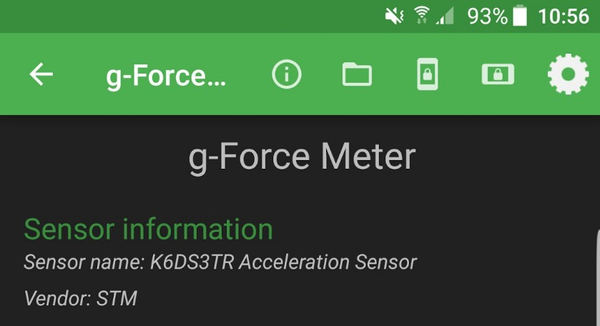
We've also recently enhanced the Sensor Information for each mode with the sensor name and manufacturer, unique to your own device. This will allow you to look for spec sheets on your own to determine both the precision and accuracy of your smartphone or tablet.
Quick Lab Idea
Measuring Pressure as a Function of Balloon Radius
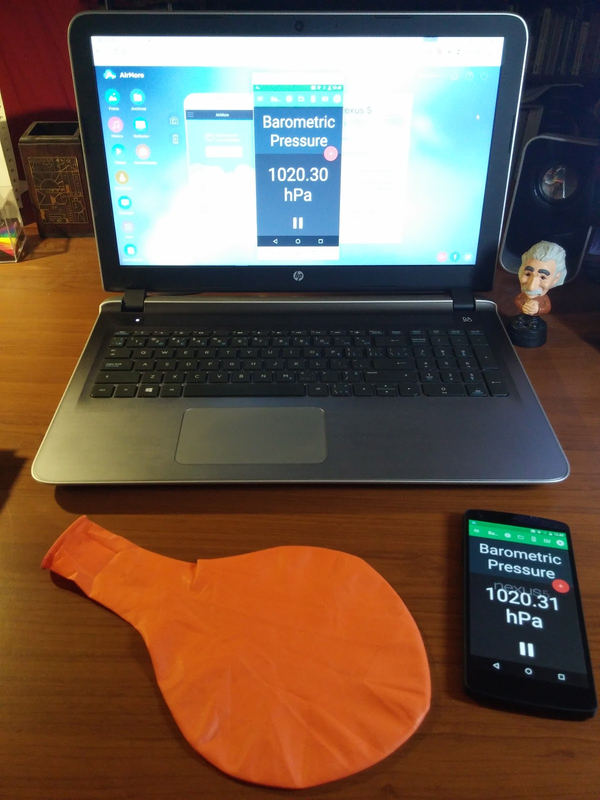
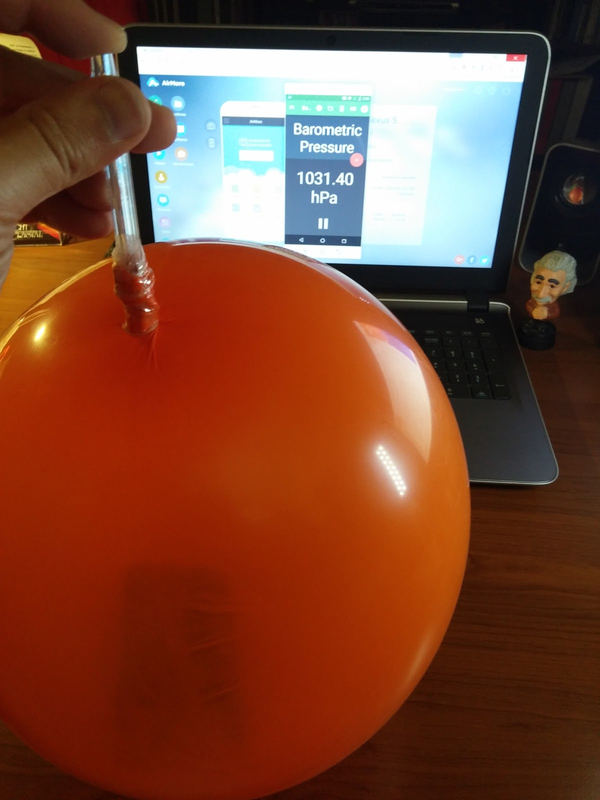
If you haven't yet checked out Martin Monteiro's smartphone physics blog, then you might want to take a close look at his recent post about measuring pressure inside a rubber balloon as a function of its radius! (If you don't read Spanish, don't fear...you can easily translate it with Google Translate. Feel free to reach out directly to @fisicamartin and his colleague @Arturo_m1968 in English).
On his post, Martin pays homage to the recent article from Vandermarliere in the AAPT's The Physics Teacher journal. If you can't access the article, however, you will find everything you need on Martin's page, including an excellent explanation of the physics and exemplar sample data.
Getting the smartphone's pressure data while inside of an opaque balloon is easy. Using an app like Airmore, you can easily use WiFi to display your smartphone's screen (and the pressure reading) on your computer or even project it to display for a class.
Smartphone Physics around the Web
Internationally spreading ideas
The past two months have been replete with users of Physics Toolbox and other smartphone physics apps sharing ideas from all around the world. Here are a few of our favorites!
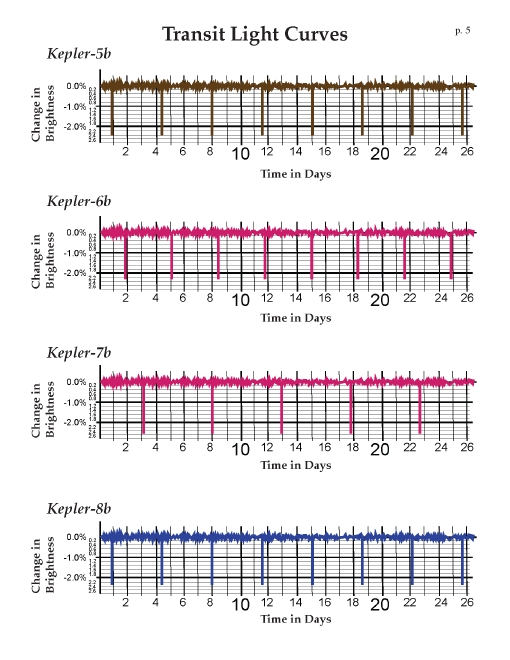
1: Hands-On Exoplanet Exploration by Bree Barnett Dreyfuss (@BarnettDrayfuss) using Kepler's Transit Tracks Light Curves. Read her blog post to learn more about how she seamlessly ties together concepts from the Next Generation Science Standards about light sensors, universal gravitation, deep space exploration, and real-life scenarios from NASA's Kepler Mission.
2: Tutorial from GorillaPhysics (@gorillaphysics)
3: Three peer-reviewed articles featuring Physics Toolbox
- Inexpensive Audio Activities: Earbud-Based Sound Experiments by Joshua Allen, Alex Boucher, Dean Meggison, Kate Hruby, and James Vesenka describes how to demonstrate sound wave interference and resonance using earbud speakers and Pixie Sticks tubes.
- On the Inflation of a Rubber Balloon by Julien Vandermarliere describes how to measure pressure inside of an inflating balloon.
- A Simple Wind Tunnel to Analyze Bernoulli's Principle by Stefano Macchia and Rebecca Vieyra describes two simple classroom experiments in which students can use their mobile device to illustrate a variant on the Bernoulli effect. Can't access the article? See a visualization of the experiment in the video below from Stefano.
4. International Smartphone Physics Webinar
The American Association of Physics Teachers (AAPT) recently hosted an international smartphone physics webinar. See a blog entry about the event here. AAPT members can access the webinar video at the archives page, and anyone is able to access the Collaborative Resource Page put together by the webinar attendees. (Disclaimer: Rebecca Vieyra hosted the round-table discussion on behalf of the AAPT to feature the growing community interested in smartphone physics. Her work with Physics Toolbox is non-commercial and unaffiliated with the AAPT).
Have Physics Toolbox Apps been useful to you? We'd love to get your feedback on this quick 5-minute survey.
Have a great story to share about how you are using Physics Toolbox Apps? We'd love to feature you and your ideas in our newsletter or on our website! Drop us a message at any time to share your story.
Previous Newsletter Editions