Inside Smartphone Sensors
Inside Smartphone Sensors
Sensing with MEMS Technology
How does a smartphone know up from down? How in the world can it tell how bright, hot, wet, and loud is its environment?
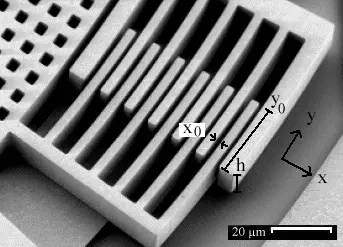
Nearly all mobile sensors are a result of micro-electro-mechanical systems or "MEMS" technology. This technology relies heavily on the use of semiconductors.
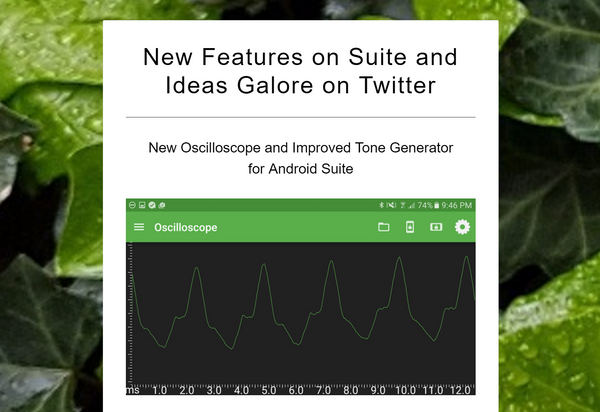
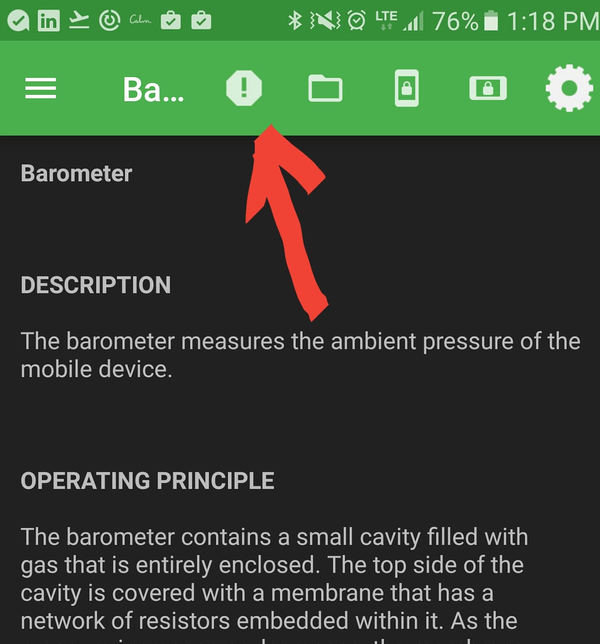
Check out the most recent version of our Android Physics Toolbox Sensor Suite for a new information dialogue page for each sensor and generator.
If you are looking for some quick answers to how the accelerometer, gyroscope, and magnetometer work, check out this video, then, check out our most recent blog.
Smartphones, Clubbers, Music, and Synchronicity
Smartphones as a tool for measuring the science of disco.
This month we were delighted to learn about the recent results published by Guerilla Science of London and the Max Plack Institute of Leipzig, Germany. This experiment entailed placing Physics Toolbox Accelerometer on dozens of clubbers as they danced to a variety of songs, and measuring their synchronicity. Read the open-access journal article to learn more!

Quick Lab Ideas
Measuring Height with a Smartphone
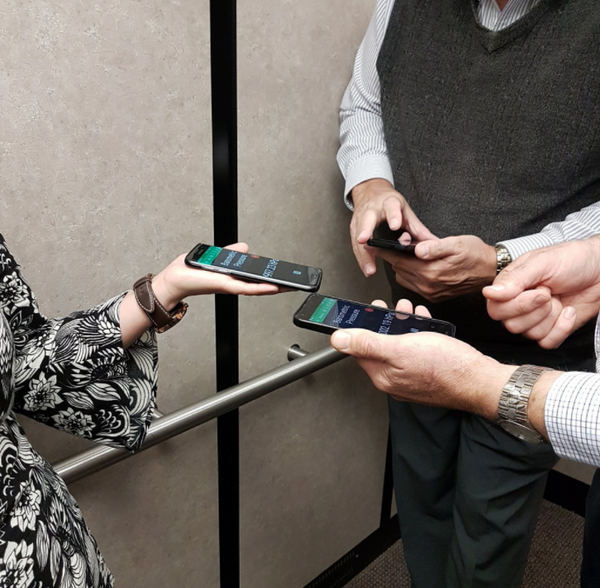
Most physics teachers have been exposed at one time or another to the anecdote in which a teacher gives a student a mercury barometer and asks the student to use it to determine the height of the school building. The student then proceeds to the roof of the building, drops the barometer, and times its descent, at which point it smashes into the ground. While the student takes the time of free fall of the barometer to accurately determine the height of the building - as requested by the teacher - the teacher is furious with the student for having ruined a perfectly good barometer.
The moral of the story is twofold: that teachers should be cautious in how they phrase their requests, and that there are many ways to correctly resolve a problem.
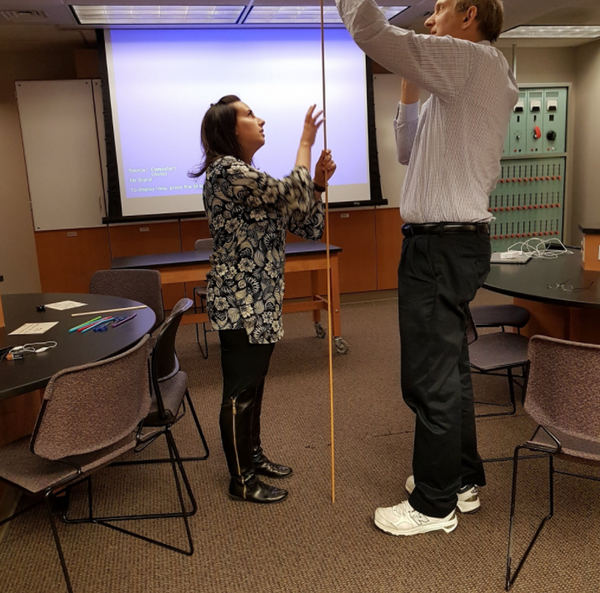
Smartphones can be used to determine height in many different ways, depending upon the appropriate context. At a recent workshop at the Illinois Section of the American Association of Physics Teachers, participants discussed the many ways that it is possible to measure height with a smartphone.
1) Use a meter stick to determine the change in barometric pressure per unit of distance (ensuring that it is a linear relationship on a graph, and then deriving the algebraic relationship), and then ride in an elevator to observe total change and extrapolate from the data collected with the meter stick.
2) Use the accelerometer on an elevator ride up or down. Exporting and integrating the data twice will give a rough estimate of vertical displace. Alternatively, it is possible to integrate only points of acceleration, and to use simple kinematic equations to determine displacement using the known change in velocity during the accelerations and the total time in motion.
3) Use the inclinometer tool to use trigonometry (and a pre-measured estimate for the students' pace in meters per steps) to estimate heigh by looking along the edge of the smartphone and recording the angle.
Have Physics Toolbox Apps been useful to you? We'd love to get your feedback on this quick 5-minute survey.
Have a great story to share about how you are using Physics Toolbox Apps? We'd love to feature you and your ideas in our newsletter or on our website! Drop us a message at any time to share your story.
Previous Newsletter Editions