Explore Space Science with Your Phone
Explore Space Science with Your Phone
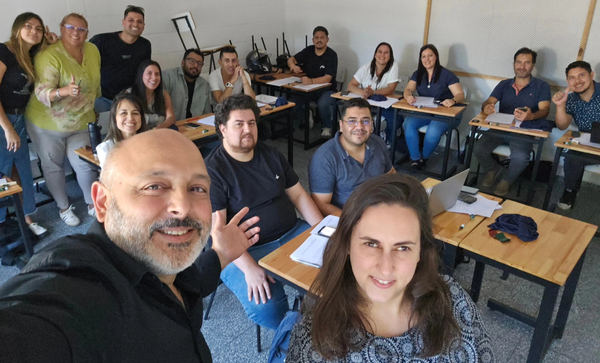
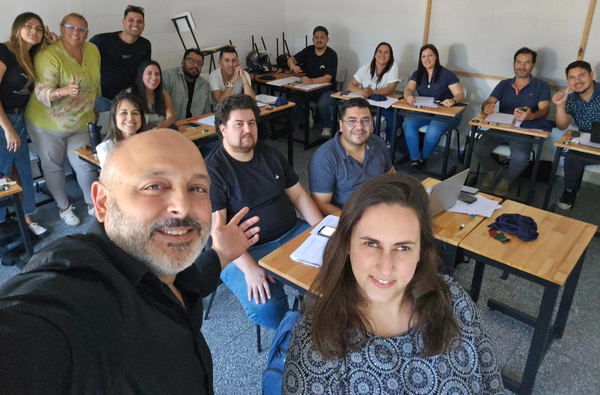
From March 20-27, two smartphone education enthusiasts, Martín Monteiro (ORT University) and Rebecca Vieyra (Vieyra Software) went on tour across Uruguay, engaging 120+ educators in day-long workshops and interactive presentations to share about novel ideas for teaching about space science.
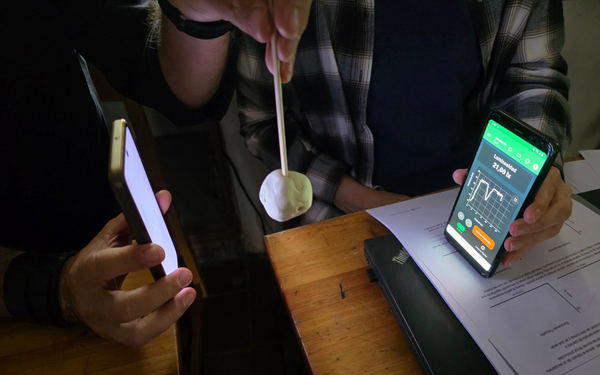
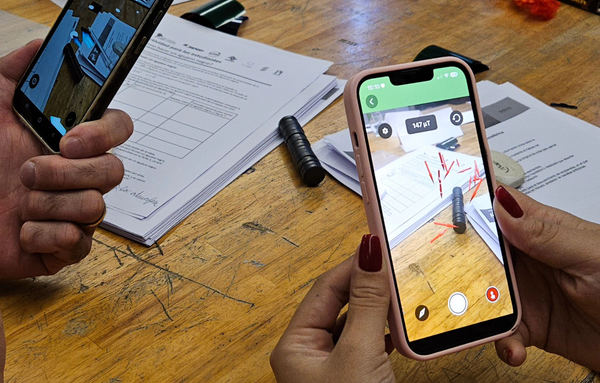
The project was made possible thanks to a grant from the U.S. Embassy in Uruguay to the Uruguayan Physics Society. Martín and Rebecca shared a variety of activities from AAPT's NASA HEAT and Perimeter Institute, including some activities involving the use of smartphones to model exoplanet transits and planetary magnetism.
In the Classroom
Undergraduate Physics Labs
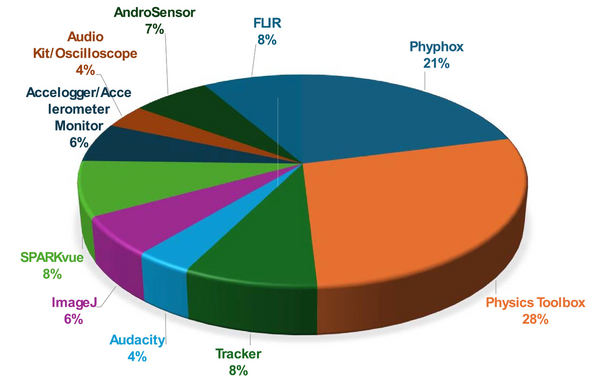
"This review presents a comprehensive synthesis of over 200 documented SmartIPL activities across key physics domains, including mechanics, optics, thermodynamics, electromagnetism, modern physics, and astronomy." The author argues that smartphones "have democratized access to high-quality experimentation worldwide"

Exploring Fluid Pressure Dependence on Position and Acceleration
It is relatively easy to determine the relationship between ambient air pressure and height, but what if the "gravitational field" could be changed? This article uses Physics Toolbox inside of a spinning tube to observe the effects of rotation on the air inside the tube.
Teaching the Tennis Racket Effect with the Help of Smartphones
Attaching a smartphone to rotating devices support advanced physics students' analysis of rigid rotating bodies, including the Dzhanibekov effect (tennis racket theorem).
An Integrative STEM Approach
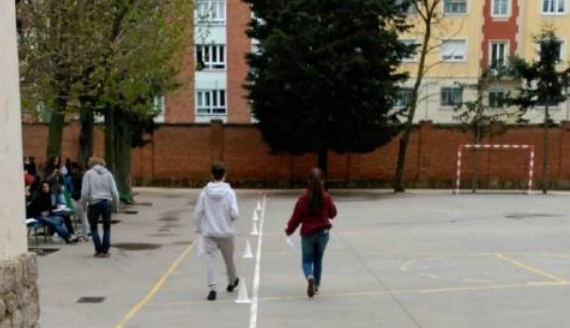
This study compared traditional versus "integrative STEM" approaches, including the use of smartphone sensors, to determine the effect on student outcomes.
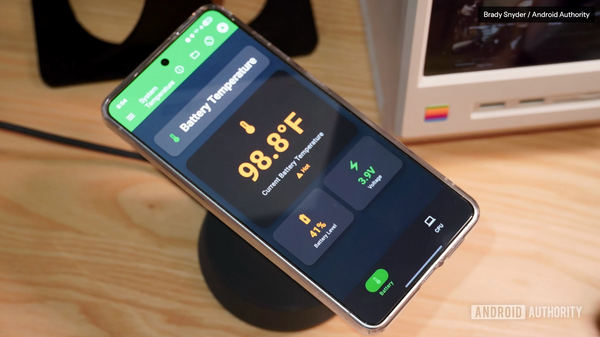
Battery Temperature Ideas: Qualitative Efficiency Study
Technology journalist Brady Snyder compares different charging methods and their effect on internal battery temperature, a possible topic for teaching about energy efficiency.
Engineering Applications
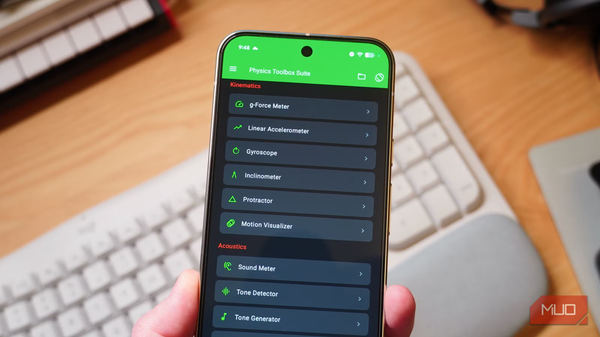
4 Smartphone Sensors You Can Experiment With
Technology journalist Brady Snyder explores Physics Toolbox.

Smartphones Effective for Predicting Falls
Medical researchers are increasingly using smartphone accelerometers as part of their "instrumented timed-up and go" (iTUG) assessments of patients to measure mobility and stability. Findings show that smartphones use is generally reliable.
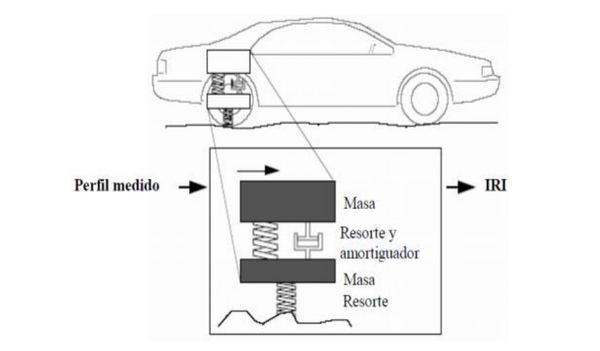
Effect of Tire Pressure for Measurement of International Roughness Index (IRI)
This graduate thesis explores how tire pressure can influence the IRI, as measured with Physics Toolbox.
Have Physics Toolbox Apps been useful to you? We'd love to get your feedback on this quick 5-minute survey.
Have a great story to share about how you are using Physics Toolbox Apps? We'd love to feature you and your ideas in our newsletter or on our website! Drop us a message at any time to share your story.
Previous Newsletter Editions