Research, Engineering, & Stats
Research, Engineering, & Statistics
New Blog Post
Physics Toolbox in Research and Engineering
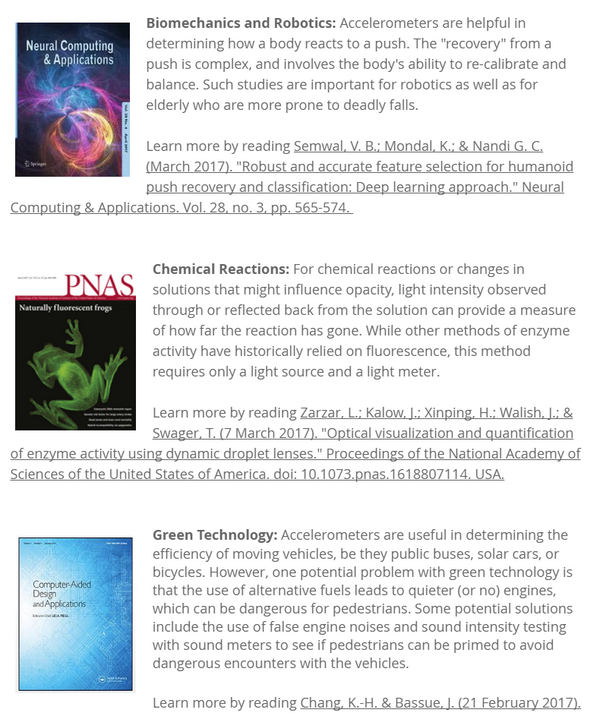
Something we hadn't quite anticipated when we developed Physics Toolbox was that its popularity among researchers, engineers, and other curious adults would surpass the use by secondary and higher education communities. What we are excited about is that the very same tool that students use in high school might still be relevant and useful by the stage in which they enter the workforce.
Quick Lab Idea
Light Curves from Asteroids
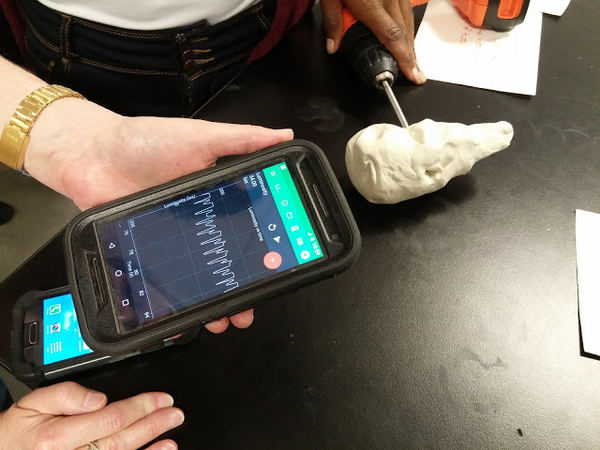
Check out this blog from Martin Monteiro, showing some of the light curves produced by a clay "asteroid" rotating on an electric drill. Modeling this astronomical detection is easy -- just use one smartphone as a light source shining toward the asteroid, and another smartphone as a light detector to look at changes in reflectivity as the asteroid rotates. For best results, create a clay (or potato) asteroid that is oblong.
Quick Lab Idea
Elevator Studies with Manual Data Smoothing
Check out this article from Spain showing the utility of data smoothing by using Excel to calculate moving averages. When you are looking for patterns over precision, moving averages can be very helpful!
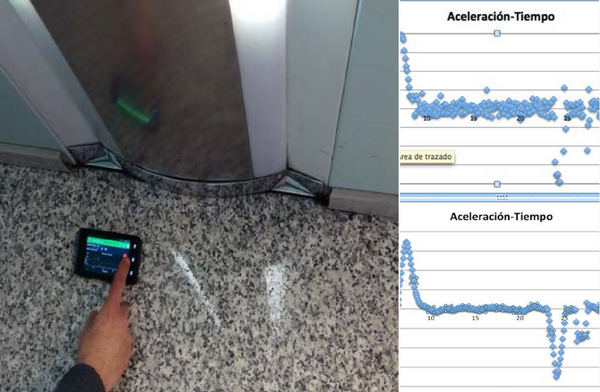
Physics Toolbox Suite Pro now offers displaying moving averages as an option within Settings. However, you can manually calculate moving averages after recording and exporting data. This simple statistical calculation is nicely explained in the following video, and can be easily performed using spreadsheet software.
Quick Lab Idea
Measure Earth's circumference a la Eratosthenes
We are past the spring equinox, but don't miss the next opportunity to determine the circumference of the Earth using nothing more than your smartphone!
Check out the video below to learn about how to use simple proportions, the angle of the sun in the sky (using the Inclinometer mode in Physics Toolbox), and your geographic distance from the equator (using the GPS mode in Physics Toolbox) to determine a rough circumference of the Earth.
Of course, you can do this on any day of the year with a clear sky, but spring and fall equinoxes allow you to make the assumption that a location at 0 degrees latitude (on the equator) will have the sun directly overhead at astronomical noon. Any other day, and you will need a partner significantly further north or south of you to provide you with data as well!
More Features
Available on Physics Toolbox Suite Pro
Check out Physics Toolbox Suite Pro's recently added features:
Moving Average: Available for all data forms with graphical outputs by selecting the option in "Settings," moving average plots the average value of 5 data points (two before and two after the point that is plotted). This feature provides data smoothing, which can be especially helpful when looking for patterns rather than precision. It is especially helpful when working with systems that have a lot of data noise.
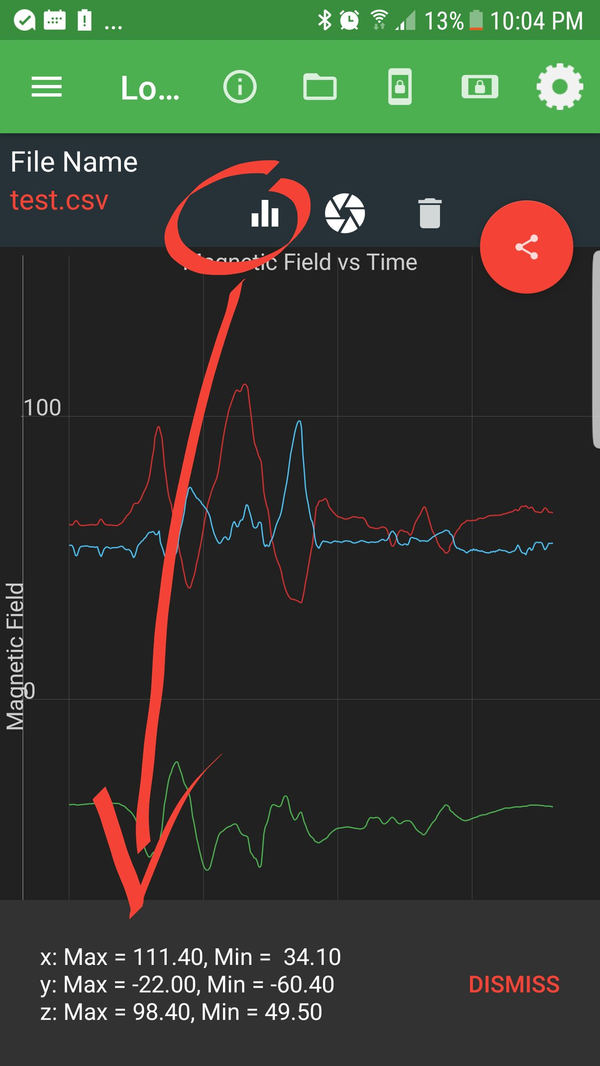
Simple Statistics: After recording and re-loading a file, click the new "bar chart" button to see simple statistics for up to three-dimensional data across the entire recorded file: simple max and min values. Expect to see an update in the near future for determine max, min, and averages of "pinch-to-select" data.
Coming soon...
- Acoustical Waterfall Plot!
App of the Week
Physics Toolbox Suite Featured in International Podcasts

Physics Toolbox Sensor Suite was featured by South Africa's TechCentral "App of the Week." Listen to the feature on the podcast starting at 37:17.

Physics Toolbox was also featured recently in the French language teaching podcast, "e-teachers." Check it out to learn about a wide variety of digital resources, including Physics Toolbox, which is mentioned starting at about 21:30.
Have Physics Toolbox Apps been useful to you? We'd love to get your feedback on this quick 5-minute survey.
Have a great story to share about how you are using Physics Toolbox Apps? We'd love to feature you and your ideas in our newsletter or on our website! Drop us a message at any time to share your story.
Previous Newsletter Editions