Connections to Computational Thinking
Cross-Connections to Computational Thinking
Join Us for a Web Chat
hosted by Open Education Europa
Physics Toolbox Sensor Suite is one of our many open educational resources (OERs). We've been asked by Open Education Europa to lead a chat about how to effectively (1) develop, (2) share, and (3) find OERs. We hope you can join in the conversation on May 24th at noon Central European Standard Time (6 AM Eastern, Washington, DC) to tell us your thoughts about our OERs, and to share your own experiences.
Open Education Europa was also kind enough to do a feature story on how we developed our apps. Check it out below.
Communicate in Binary via a
Light Meter "UPC" Reader
Supporting Computational Thinking in Physics
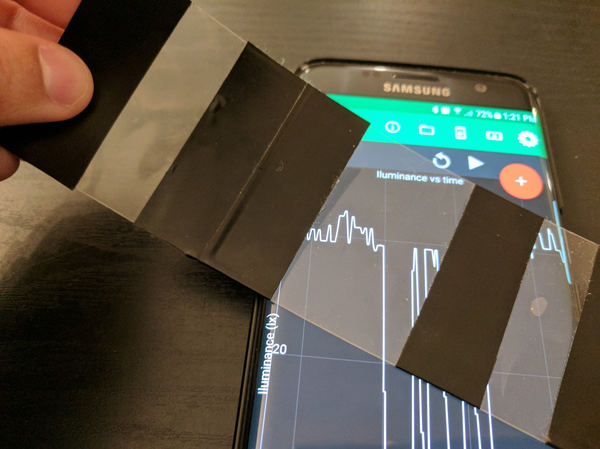
Mathematical and computational thinking has recently received a significant amount of attention in educational technology and educational policy at the state and federal level... See one example activity that integrates understandings of data information and transfer with physics.
More Features
Available on Physics Toolbox Sensor Suite and Suite Pro
This has been a very busy month for us. If you haven't yet gotten the updates on Suite or Pro, watch for the following updates (to be pushed to 100% of users in the next few days):
Updates for Suite and Pro
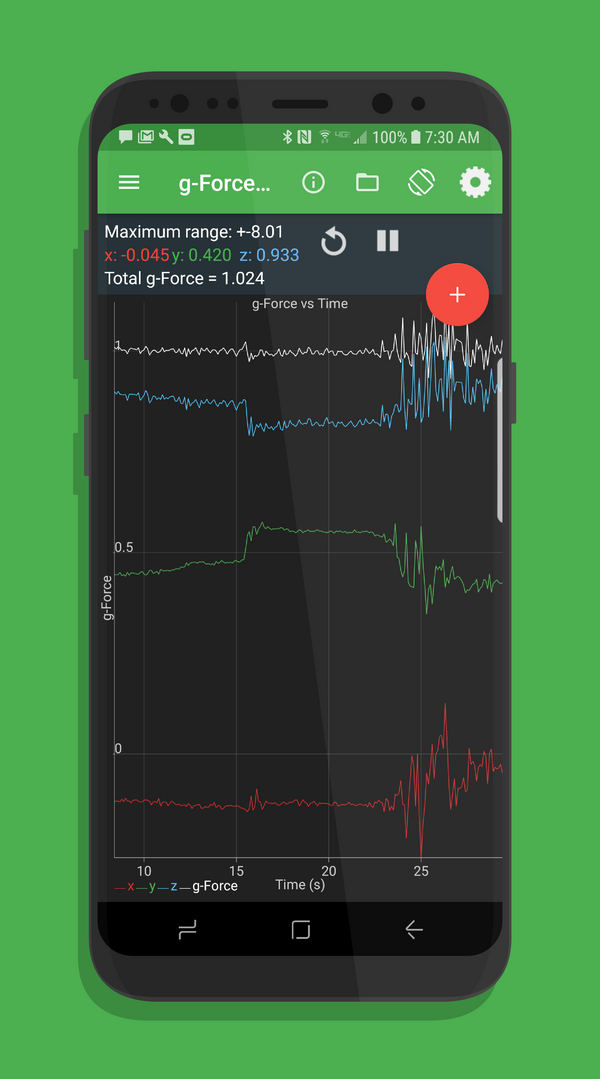
- Screen rotation buttons combined
- Visual enhancements to support 18:9 (2:1) aspect ratios for newer phones
- Inclinometer: colors correspond to axis of rotation (x, y, z)
- Proximiter: background changes for more obvious detection of object
- Tone Detector: added pause button to capture variable tones
- Sound Meter, Spectrum Analyzer, Oscilloscope: support for external microphone
No External Thermometer? Scratch and Micro:bit
Ideas from Alfonso D'Ambrosio
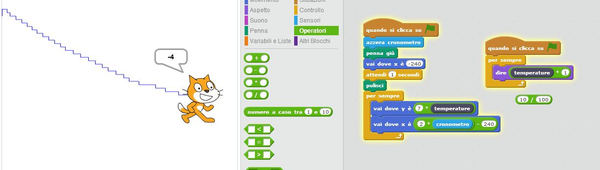
Most smartphones have barometers. When smartphones have barometers and external thermometers combined, they make fore exceptionally powerful tools for chemistry education. Unfortunately, external thermometers are really only present on a few popular models of Android phones: the Galaxy S 4 and Galaxy Note 3. One solution identified by Alfonso D'Ambrosio is to use an external device, such as a Micro:bit. In this blog post (Google translated page in English). This solution is a bit more complex than having a phone with an internal thermometer, but it can also be an opportunity for students to do a bit of visual programming with Scratch.
Have Physics Toolbox Apps been useful to you? We'd love to get your feedback on this quick 5-minute survey.
Have a great story to share about how you are using Physics Toolbox Apps? We'd love to feature you and your ideas in our newsletter or on our website! Drop us a message at any time to share your story.
Previous Newsletter Editions