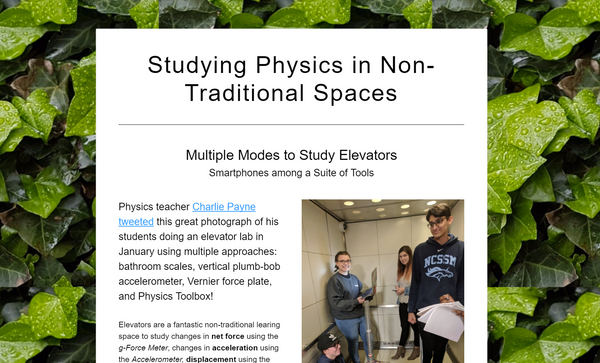
Professional Development for Teachers and Students
Professional Development for Teachers and Students
Professional Development Workshop for Teachers
Smartphones among a Suite of Tools
This month we've heard a lot from our users about their use of our apps for doing professional development with teachers, from STEM workshops with students in South Africa to Uruguay to Spain. If you happen to do a workshop, please consider sharing some photographs, as well as contributing to a repository of workshop ideas we'd be very happy to curate to support others who want to do workshops. Reach our directly to us at support@vieyrasoftware.net
Our Uruguayan colleague Martin Monteiro of #SmarterPhysics shared this series of photos from a workshop given to high school physics teachers on 7 February. With the right environment, two smartphones (one as light source and one as sensor) and a meter stick are sufficient to see a beautiful inverse square curve. See the original Tweet.
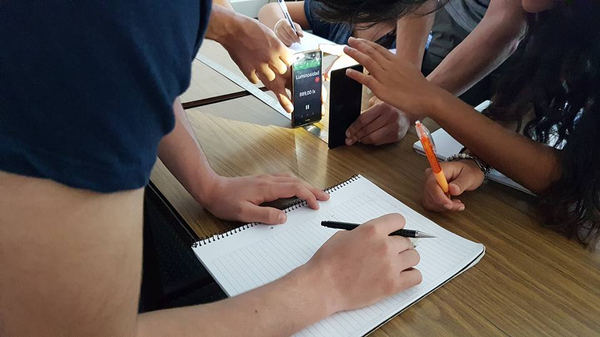
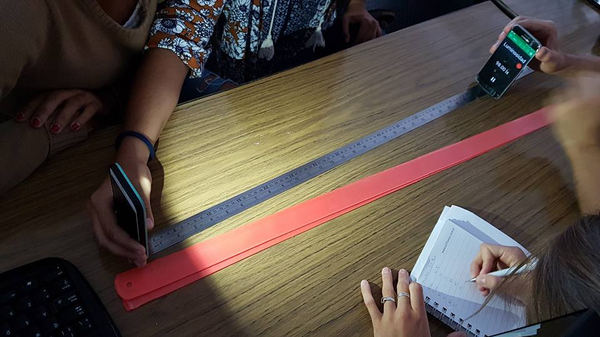
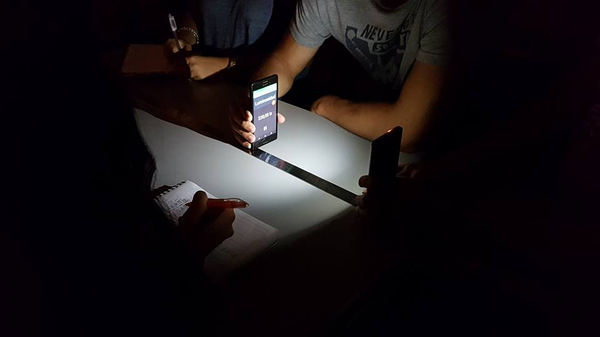
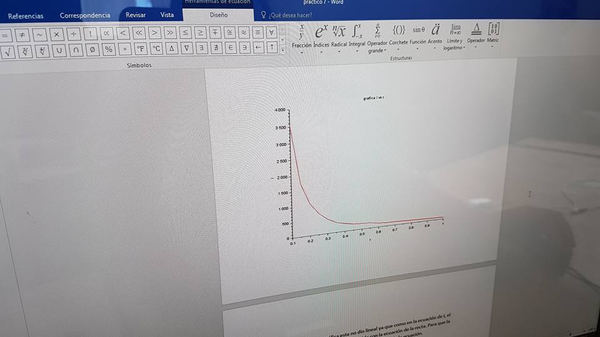
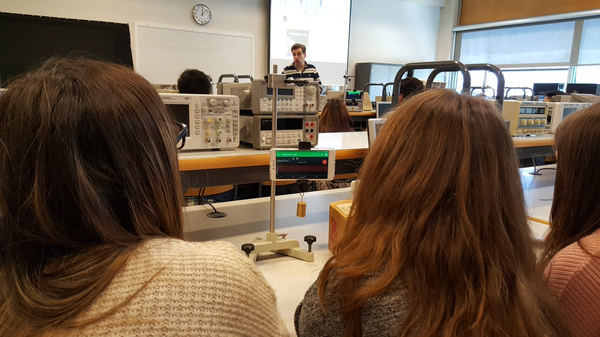
On 21 February, another workshop was held in Spain for students and faculty, organized by the #SmartPhysics group, including @JuanAntMonsoriu, @Tresse77, and Amparo Pons. Activities included the inverse-square law for light (as above), as well as oscillatory motion with pendula. See the original Tweet.
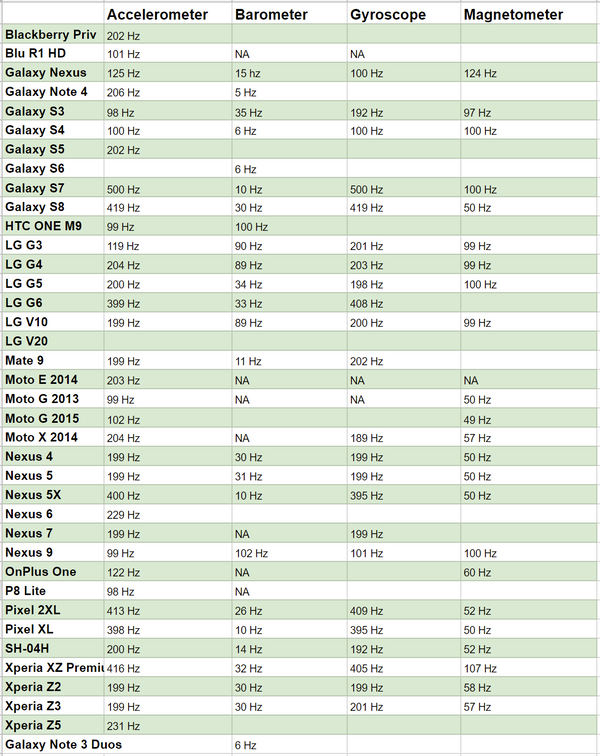
Sensor Data Frequency
The hardware of your particular smartphone, tablet, or Chromebook determines the various properties of their sensors. Wide variations can exist in what sensors are included in a device, as well as how frequently they can collect data.
Before buying your next Android phone, check out our compilation of maximum sensor frequencies, and learn how to change the data collection rate.
Conversations in Sweden
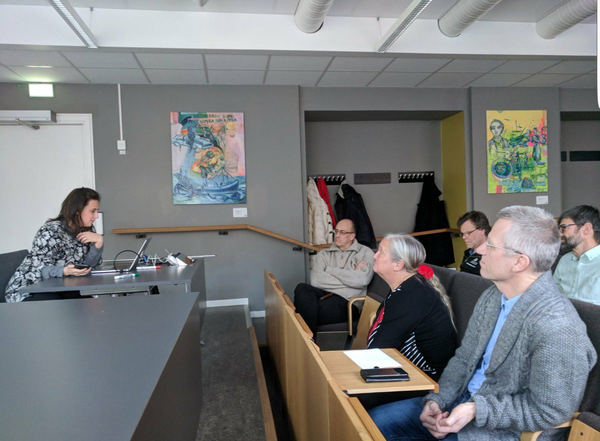
The Vieyra family recently planned a trip to southern Sweden for vacation. Thanks to connections through Ann-Marie Pendrill (amusement park enthusiast, smartphone physics user, and advisory member to the Physics Toolbox Play project), we were able to engage in conversations with a variety of individuals about using smartphone sensors for physics research. Seminars were arranged in the physics departments of the University of Gothenburg and Lund University, as well as a visit to the world-reknowned Visualiseringscenter. We were excited to engage in dialogue with university and high school physics faculty, including teacher educators, as well as graduate students. Thanks to Ann-Marie Pendrill for promoting inspiring conversation!
Physics Toolbox around the Web
We are always curious to learn about how Physics Toolbox is being employed in education and industry around the world. Here are a few references using or citing the work of the Physics Toolbox team.
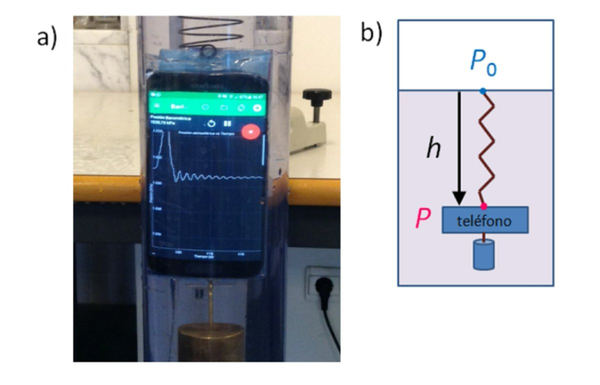
Attaching a protected smartphone to a spring in water allows the observation of barometric oscillations damped by a fluid. Read a pre-publication paper, and check out the video below.
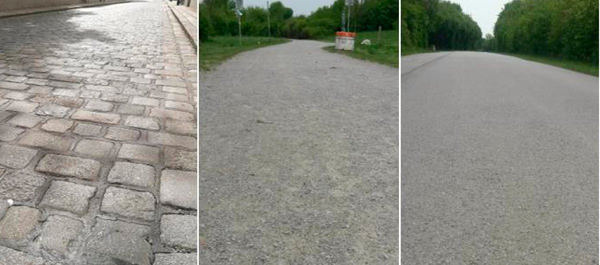
Road quality data is largely missing from maps, but can be very important. New research shows that smartphone data while riding a bike can provide this information with 97% accuracy, and could serve as a way to crowdsource this information for mass dissemination.
Our first citation was about horizontally-oscillating carts on an air track. Here's another about measuring spring constants with the light sensor.

Use the tone generator and a balloon to observe Lissajous curves.
We looked forward to full publication of this accepted manuscript about modeling magnetic surveying with the smartphone magnetometer.
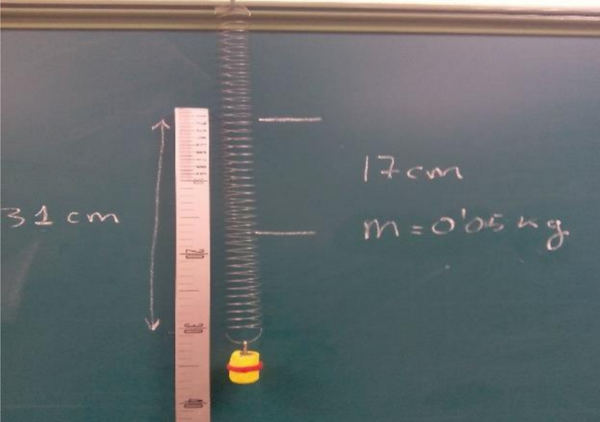
This Catalan-language article looks at how a study of oscillations with smartphone sensors can complement video-analysis using Tracker.
Have Physics Toolbox Apps been useful to you? We'd love to get your feedback on this quick 5-minute survey.
Have a great story to share about how you are using Physics Toolbox Apps? We'd love to feature you and your ideas in our newsletter or on our website! Drop us a message at any time to share your story.
Previous Newsletter Editions